
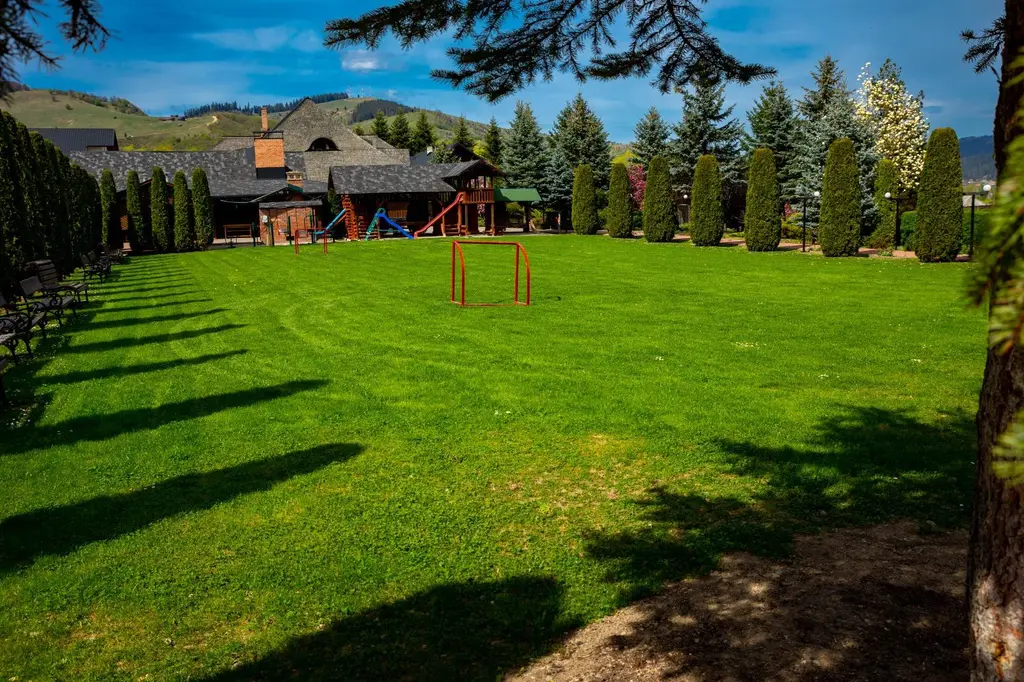

Discover Bucovina
Humor red, Voroneț blue, Sucevița green, Moldovița yellow, the painted monasteries of Bucovina are steps away from Casa Elena. Here is what to visit around Voroneț.
When you say Voroneț blue, you think of Bucovina
At the foot of the Obcini hills, the village of Voroneț is the ideal starting point for the painted monasteries of northern Moldavia, medieval masterpieces on the UNESCO World Heritage list. At the Casa Elena reception we help with maps, visiting hours and route recommendations.
Voroneț
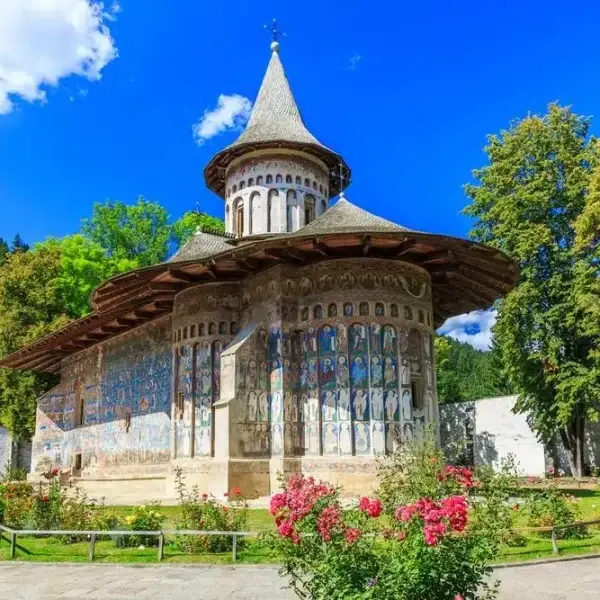
Built in 1488, in just three months and three weeks, Voroneț is nicknamed the “Sistine Chapel of the East” thanks to the fresco on its western façade depicting the Last Judgement, one of the most valuable foundations of Stephen the Great.
The famous Voroneț blue impresses not only through its pigment but also through its resistance to the elements. The colour comes from a secret azurite-based recipe, making it the most durable shade among exterior frescoes. A historic monument since 1918, the monastery joined the UNESCO World Heritage list in 1993.
Sucevița
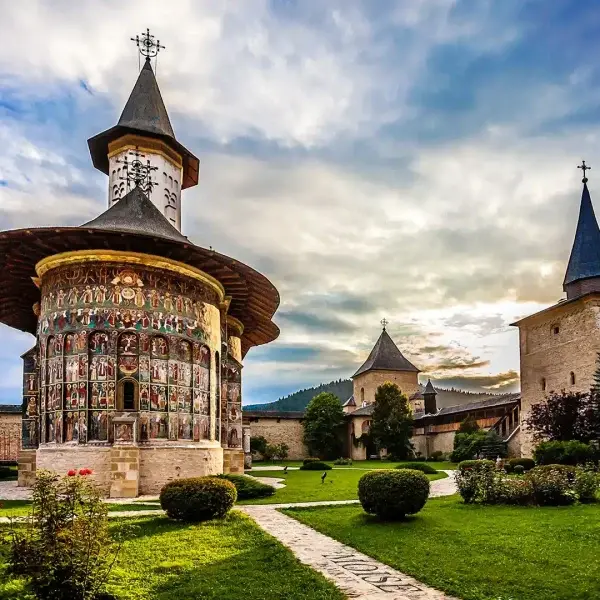
A joint foundation of the Movilești family, built in the Moldavian architectural style with Byzantine and Gothic elements, surrounded by walls six metres high and three metres thick.
Added to the UNESCO heritage list in 2010 and to the historic monuments list in 2015, Sucevița is the only church depicting the Ladder of Saint John Climacus. It lies 18 km from Rădăuți and 55 km from Câmpulung Moldovenesc.
Putna
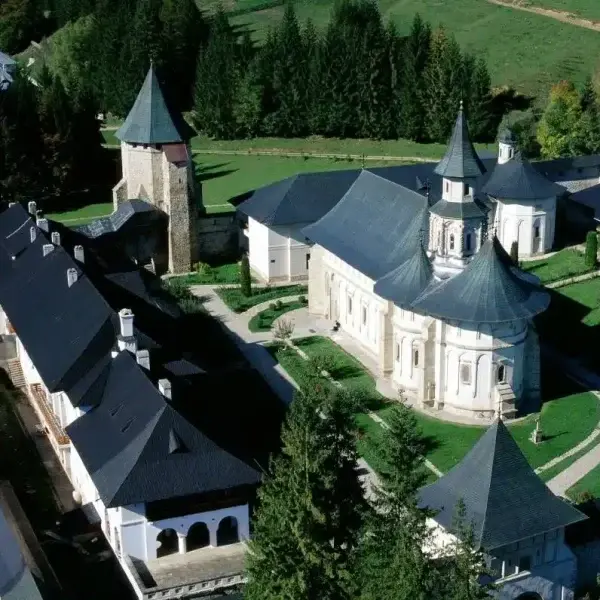
One of the most important Romanian cultural, religious and artistic centres, called by Mihai Eminescu, in 1871, the “Jerusalem of the Romanian Nation”. The tomb of Stephen the Great lies here.
Besides the church, the ensemble includes the gate tower, the bell tower, the cells, the chapel, the museum, the treasury tower, the princely house and the fortification wall enclosing the precinct. The monastery is 33 km from the town of Rădăuți.
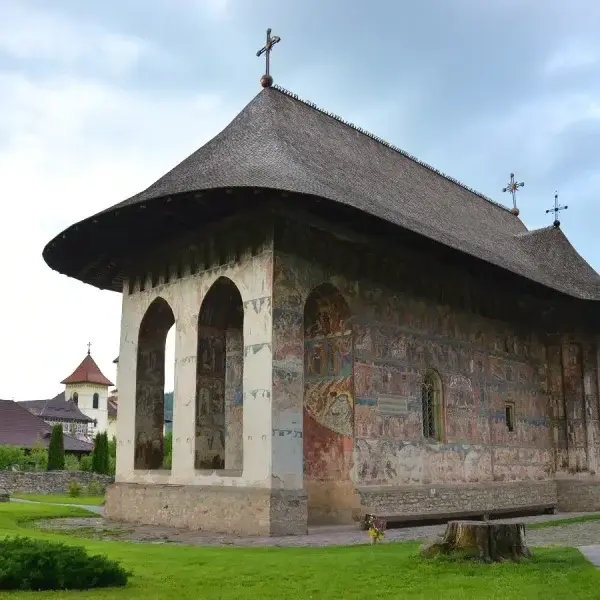
Humor
It stands out through its exterior painting dominated by the “Humor red”, its most representative scene being the Siege of Constantinople. It is one of the most important foundations of the Moldavian Middle Ages, dedicated to the Dormition of the Mother of God and Saint George.
Visiting is paid: the ticket costs 5 lei, and the exterior photo fee is 10 lei. Photography inside is forbidden.
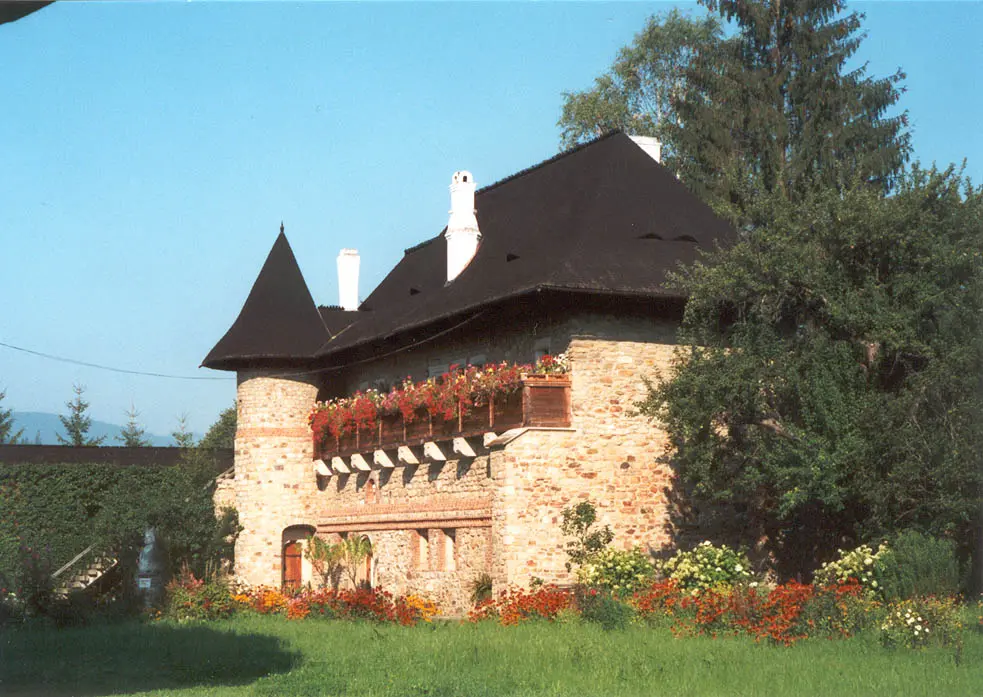
Moldovița
In the commune of Vatra Moldoviței, the monastery impresses through the paintings of its exterior walls, where red-brown dominates and religious, historical and cultural scenes are depicted. Of all the Bucovina churches, the paintings here are the best preserved, the most admired being the image of the Mother of God holding Jesus, cheek pressed to hers.
The museum holds the princely throne of Petru Rareș, an embroidered epitaph, icons, embroideries and rare books. The “Golden Apple” award, granted by the International Federation of Journalists, is also kept here.
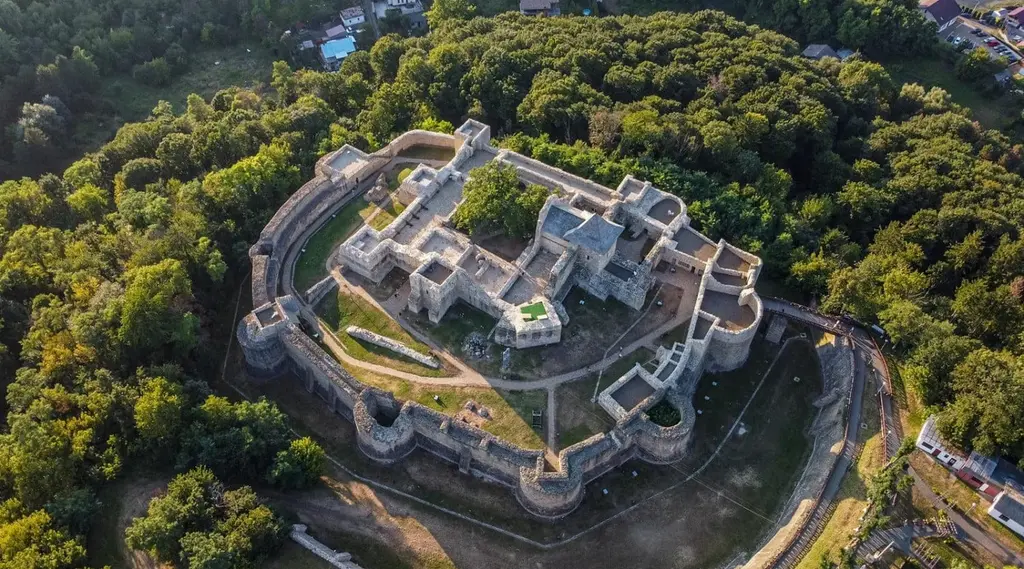
Suceava
Princely residence and the main fortress of medieval Moldavia, the Princely Citadel was built at the end of the 14th century by Petru I Mușat and later reinforced by Stephen the Great.
In 1476 it withstood the siege of Sultan Mehmed II, the conqueror of Constantinople. Today the restored citadel houses a history museum and overlooks the city of Suceava from its plateau.
Distances from Casa Elena
Voroneț places you at the centre of the painted-monasteries circuit. The nearest can be visited in a morning; reserve a full day for Putna and Sucevița.